Google isn’t launching a new model. It isn’t teasing a flashy demo.
Instead, it’s placing a quieter—and arguably smarter—bet on how artificial intelligence will evolve next.
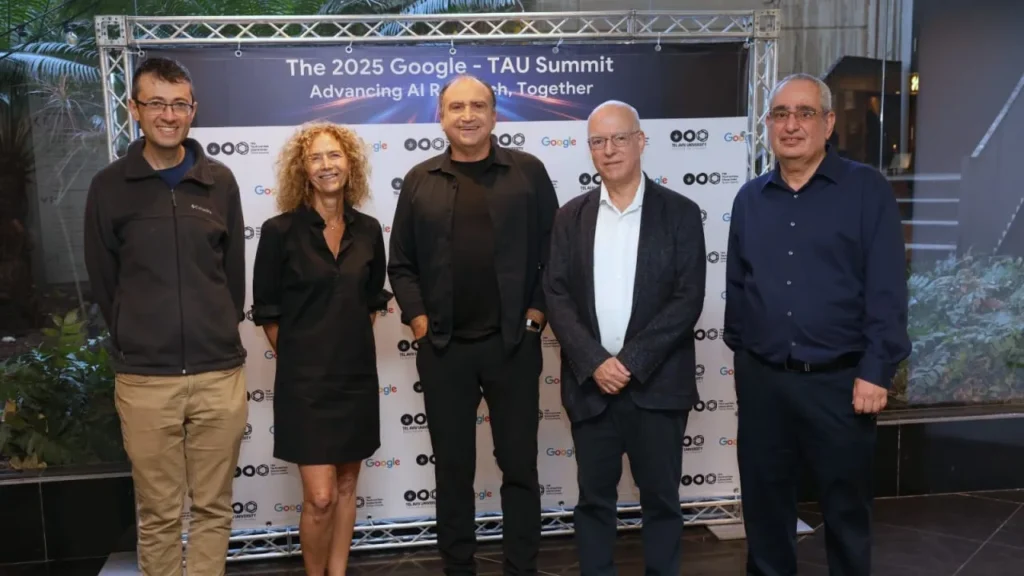
This week, Tel Aviv University and Google announced a new three-year collaboration aimed squarely at the foundations of AI research. The program, backed by $1 million from Google.org, will focus on the theory, efficiency, and societal limits of modern AI systems—well upstream from products consumers ever see.
The initiative will be led by Tel Aviv University’s Center for AI & Data Science and builds on a partnership between the two institutions that’s been quietly running for nearly five years.
Why this isn’t just another university grant
At a time when AI headlines are dominated by ever-larger models and escalating compute costs, this program is intentionally moving in the opposite direction.
Researchers involved will dig into why large language models work as well as they do—and where they break. One of the core goals is improving algorithmic efficiency, a problem that’s becoming impossible to ignore as training state-of-the-art models consumes massive energy, capital, and infrastructure.
In other words, this is about making AI smarter, not just bigger.
Privacy becomes a first-class research problem
Privacy is another major focus of the program, reflecting growing pressure on AI companies worldwide.
As governments—particularly in Europe—tighten rules around data use and automated decision-making, privacy-preserving AI has shifted from a “nice to have” to a hard requirement. By anchoring this work inside an academic environment, the program gives researchers space to explore solutions without the immediate commercial pressures that dominate industry labs.
That distinction matters. Many of today’s most difficult AI problems—trust, explainability, and data governance—don’t have quick product fixes.
Funding people, not hype
The $1 million from Google.org won’t just bankroll research papers.
A significant portion will go toward scholarships for PhD students working in core AI fields, including students from Israel’s social and geographic peripheries. The program also introduces new educational tracks, such as an honors pathway for graduate AI students and an expanded youth initiative designed to expose teenagers to AI research early.
The strategy is clear: strengthen the talent pipeline long before it reaches Big Tech hiring funnels.
Why Google keeps investing in academia
For Google, the move reflects a long-held belief that universities remain essential to AI’s long-term progress.
Prof. Yossi Matias, Google’s Vice President and Head of Google Research, has repeatedly emphasized the value of academic–industry cross-pollination. As AI research becomes increasingly interdisciplinary—touching ethics, law, biology, and social science—universities offer a kind of intellectual freedom that corporate labs often can’t.
Israel, meanwhile, remains one of Google’s most important research hubs outside the U.S., making Tel Aviv University a natural anchor for that strategy.
Part of a longer story
This isn’t a standalone experiment. Google and TAU have collaborated on earlier AI initiatives spanning health, sustainability, and education, and Google has supported programs aimed at improving diversity in scientific research at the university.
The difference this time is scope and intent: a multi-year commitment focused on AI’s core questions, not short-term deliverables.
The bigger signal
Zoom out, and the announcement points to a subtle shift in how major tech companies are thinking about AI’s future.
As public scrutiny intensifies and AI systems edge closer to becoming critical infrastructure, companies like Google are investing further upstream—into theory, education, and trust. The returns won’t show up in quarterly earnings, but they may shape how the next generation of AI systems are built, governed, and regulated.
Conclusion
This isn’t the kind of AI news designed to dominate social feeds.
But by funding foundational research and widening access to AI education, Google is signaling something important: the next real breakthrough in artificial intelligence may come not from a product launch, but from understanding the science behind the machines we already rely on.