Artificial intelligence has had a blockbuster run. In just a few years, we’ve gone from novelty chatbots to AI systems that write production code, drive cars, and sit inside core enterprise workflows. If 2025 was the year AI proved it could scale, 2026 will be the year it’s tested by reality.
After reviewing expert forecasts, market data, legal trends, and real-world deployments, one theme stands out: AI will keep improving fast—but its economic and societal impacts will arrive more gradually than the loudest predictions suggest.
This article breaks down well-researched predictions for AI in 2026, combining technical progress, business outcomes, legal shifts, and cultural reactions—written in plain English, grounded in evidence, and designed to help you separate signal from noise.
Why 2026 Won’t Be an “AI Takeoff” Year
Before diving into individual predictions, it’s important to set expectations.
AI progress is real. Model capabilities are rising. Investment is exploding. But history tells us that general-purpose technologies—like electricity, the internet, or cloud computing—take years to reshape productivity, not months.
AI is following that pattern.
In 2026, we’ll see:
- Massive capital spending
- More capable AI agents
- Clearer legal rules
- Incremental economic gains
—but not a sudden GDP explosion or societal upheaval.
Now, let’s get specific.
Big Tech Will Spend Over $500 Billion on AI Infrastructure (75% Confidence)
The world’s largest tech companies—Google, Microsoft, Amazon, Meta, and Oracle—are racing to build AI infrastructure at a historic scale.
In 2024, hyperscalers spent roughly $241 billion on capital expenditures. By the end of 2025, that number will exceed $400 billion. 2026 is likely to cross the $500 billion mark.
Why this isn’t a bubble (yet):
- Customers are already buying AI services at scale
- Data centers are running near capacity
- Demand is coming from enterprises, not just startups
This level of spending rivals the Apollo Program—except this time, it’s driven by commercial demand.
OpenAI and Anthropic Will Hit (or Beat) Their Revenue Targets (80%)
Two companies sit at the center of today’s AI boom: OpenAI and Anthropic.
- OpenAI is targeting $30B in 2026 revenue
- Anthropic is aiming for $15B
These numbers sound aggressive—but they’re plausible.
Why?
- Enterprises are embedding AI into daily workflows
- Automation doesn’t require breakthrough intelligence
- Subscription-based AI scales extremely well
Even modest productivity gains across thousands of firms add up fast.
Context Windows Will Plateau Around One Million Tokens (80%)
Early AI progress was fueled by expanding “context windows”—how much information a model can process at once.
But in 2026, that growth will slow.
Why?
- Larger context windows are expensive
- Transformer architectures hit efficiency limits
- Most tasks don’t need massive context
Expect specialized coding models to stretch limits—but general-purpose models will stay around 1 million tokens.
U.S. GDP Growth Will Stay Below 3.5% (90%)
Despite breathless claims of an “AI-fueled economic takeoff,” macroeconomic data tells a calmer story.
AI will:
- Boost data center construction
- Improve firm-level productivity
- Create new services
But these gains are incremental, not explosive.
In 2026, real GDP growth in the U.S. will likely remain within historical norms—under 3.5%.
AI is powerful, but economic diffusion takes time.
AI Will Handle 20-Hour Software Tasks—Half a Workweek (55%)
Research from METR shows AI systems are doubling the length of tasks they can complete every few months.
By late 2026:
- Top models may complete 20-hour software engineering tasks
- Reliability will hover around 50%
This doesn’t replace engineers—but it reshapes how they work:
- AI handles scaffolding
- Humans focus on design, review, and strategy
The biggest winners? Developers who know how to collaborate with AI.
The AI Legal Free-for-All Will End (70%)
The early AI boom thrived in regulatory gray zones. That era is closing.
By 2026:
- Courts will enforce guardrails
- Companies will face penalties for predictable harms
- Compliance will become a competitive advantage
AI firms won’t be shut down—but they will be forced to grow up.
No Major AI-Driven Catastrophes Will Occur (90%)
Despite legitimate fears—cyberattacks, bio risks, misinformation—2026 won’t see an AI-enabled disaster that dwarfs historical precedents.
Why?
- Practical misuse lags behind capability
- Providers are tightening safeguards
- Harmful applications take time to scale
Fear sells headlines. Reality moves slower.
Major AI Firms Will Abandon MCP (90%)
The Model Context Protocol (MCP) promised standardized AI tool access—but modern models already understand APIs directly.
By 2026:
- MCP will be seen as unnecessary complexity
- Vendors will stop investing in it
- Simpler agent architectures will win
Sometimes, abstraction hurts more than it helps.
A Chinese Company Will Surpass Waymo’s Robotaxi Fleet (55%)
Waymo leads in autonomy—but fleet size matters.
Chinese firms like Pony.ai and Baidu Apollo Go:
- Manufacture at scale
- Deploy faster internationally
- Operate under fewer supply constraints
By late 2026, at least one may surpass Waymo in total global robotaxis.
The First Fully Driverless Consumer Car Won’t Be From Tesla (75%)
Contrary to popular belief, Tesla is unlikely to sell the first truly driverless consumer vehicle.
A smaller player—like Tensor—has more incentive to take the risk:
- Limited operational zones
- Controlled rollout
- Willingness to assume liability
Tesla can afford to wait. Startups can’t.
Tesla Will Launch a Truly Driverless Taxi—In One City (70%)
That said, Tesla will debut a fully driverless robotaxi service—with no safety driver—in at least one city in 2026.
Expansion will be slow.
Remote oversight will be heavy.
But it will happen.
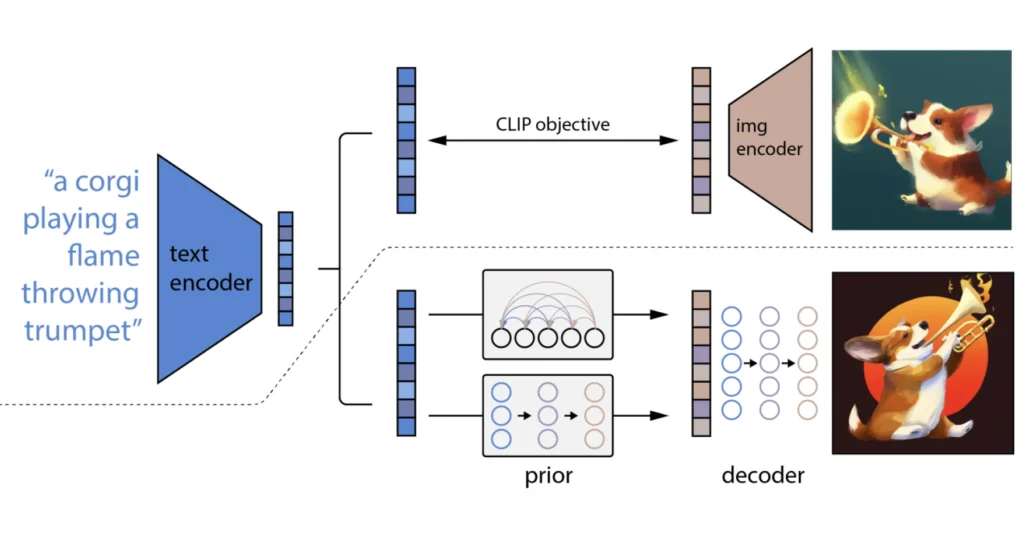
Text Diffusion Models Will Go Mainstream (75%)
Autoregressive models won’t disappear—but diffusion-based text models will gain traction.
Benefits:
- Faster generation
- Better data efficiency
- Strong coding performance
Expect hybrid systems that combine both approaches.
An Anti-AI Super PAC Will Raise $20M+ (70%)
AI anxiety is bipartisan—and under-organized.
By 2026:
- A well-funded anti-AI super PAC will emerge
- Messaging will focus on jobs, surveillance, and Big Tech power
- Regulation debates will intensify
Politics always follows technology.
Media Coverage Linking AI to Suicide Will Triple—But Rates Won’t (85%)
High-profile lawsuits and tragic stories will dominate headlines.
But data suggests:
- Suicide rates will remain stable or decline
- Media attention will outpace real-world change
Correlation will be mistaken for causation—again.
U.S. Open Models Will Catch Up to Chinese Ones (60%)
Chinese open models surged ahead in 2025.
In 2026:
- Western labs will close the gap
- Open-weight momentum will return
- Investment will rebound
The open AI race isn’t over—it just paused.
Meta’s Vibes Will Beat Sora on Daily Users (70%)
Product design matters.
While Sora impressed early, Meta’s distribution muscle may win the long game.
Engagement beats novelty.
Counterpoint: Sora Could Still Win (65%)
Licensing deals with Disney and smarter UX could flip the script.
If OpenAI nails:
- Franchise content
- Creator tools
- Social sharing
Sora could regain momentum.
This race is far from settled.
Conclusion: 2026 Is the Year AI Grows Up
AI in 2026 won’t be about shock and awe.
It will be about:
- Scaling responsibly
- Integrating deeply
- Proving real value
The technology will move fast. Society will adapt slowly. And that’s exactly how transformative change usually unfolds.
2026 won’t be the year AI changes everything—but it will be the year AI proves it’s here to stay.
FAQs: AI in 2026
Will AI replace jobs in 2026?
AI will change roles, not eliminate most jobs. Productivity gains will be gradual.
Is AGI expected in 2026?
No. Experts expect continued progress—but not artificial general intelligence.
Will AI cause a recession or boom?
Neither. Economic effects will be modest and incremental.
Are AI regulations coming?
Yes. Courts and governments will impose clearer rules in 2026.
Which industries benefit most from AI in 2026?
Software, customer support, logistics, and healthcare administration.
Is AI investment a bubble?
Spending is high—but driven by real demand, not speculation alone.