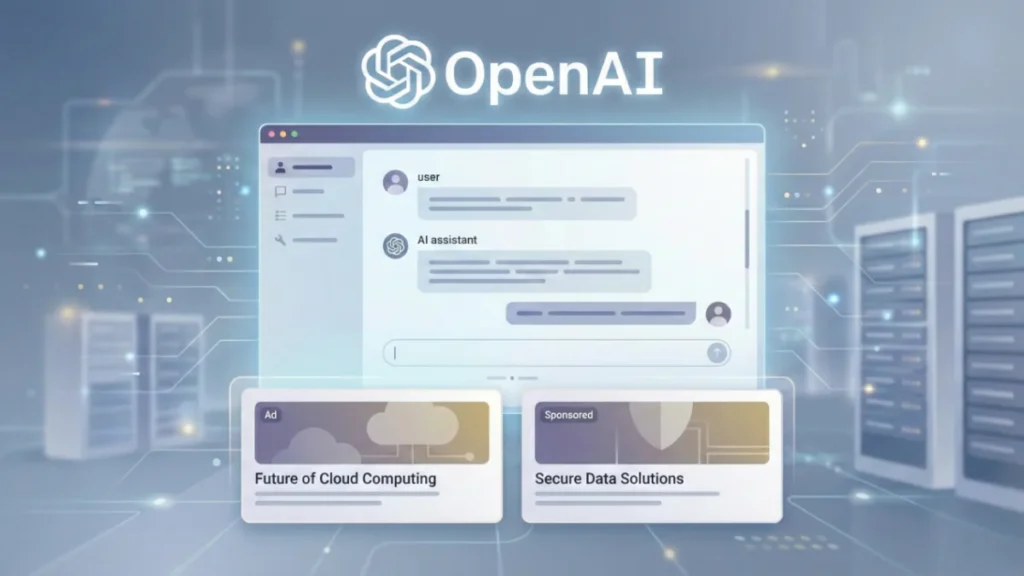
When OpenAI says it’s testing ads in ChatGPT, it’s not pitching a pivot—it’s signaling a funding strategy. The move arrives alongside the global expansion of ChatGPT Go, the company’s $8-per-month plan, now available in the U.S. and other markets. Together, the two decisions outline how OpenAI plans to scale access to advanced AI without putting everything behind a paywall.
At a glance, ads in an AI chatbot feel inevitable. At scale, compute is expensive. As more users rely on ChatGPT for learning, work, and everyday problem-solving, the costs compound. Subscriptions help, but they don’t reach everyone. Ads, OpenAI argues, can bridge that gap—if they’re done carefully.
Why Ads, and Why Now
OpenAI’s timing matters. The company has spent months expanding features—longer conversations, image creation, file uploads, and memory—while also rolling out lower-cost access through Go. Ads are framed as the third leg of that stool: a way to subsidize free and low-cost use without forcing users into higher tiers.
This isn’t about chasing engagement metrics. OpenAI says it won’t optimize for time spent or clicks. The bet is that modest, well-contained advertising can fund access while preserving trust—an approach that deliberately contrasts with how social platforms evolved.
Drawing a Hard Line Around Answers
The central risk is credibility. ChatGPT doesn’t just surface links; it generates answers. OpenAI insists ads will not influence responses in any way. Sponsored content will be clearly labeled and placed below answers, not woven into them. Conversations won’t be shared with advertisers, and user data won’t be sold.
That separation is the product decision to watch. If users ever suspect that answers are shaped by sponsorships, the system breaks. OpenAI appears to understand that the interface itself—not just policy language—has to enforce independence.
What Early Ad Tests Will Look Like
Initial tests will be limited to logged-in adults in the U.S. using the free tier or Go plan. Ads may appear when a sponsored product or service is relevant to the ongoing conversation. Users can see why an ad appeared, dismiss it, or provide feedback.
Some boundaries are firm. Ads won’t appear near sensitive or regulated topics like health, mental health, or politics. Accounts identified as under 18 won’t see ads at all. Higher-tier subscriptions—Pro, Business, and Enterprise—remain ad-free.
The Upside for Smaller Businesses
There’s a quieter implication here: conversational ads could shift discovery. Instead of competing for keywords or feeds, smaller brands might show up when users are already asking questions. Over time, ads could become interactive, letting people ask follow-ups before making decisions.
If that works, it could lower barriers for emerging companies that struggle on traditional ad platforms dominated by incumbents.
The Bigger Picture
AI assistants are quickly becoming foundational tools. How they’re funded will shape who benefits—and who doesn’t. OpenAI’s hybrid model suggests a future where intelligence isn’t reserved for those who can pay, but also isn’t dependent on aggressive data extraction.
The company is betting that transparency, restraint, and user control can keep ads from distorting the product. That’s a high bar, and it will be tested as soon as ads ship.
What Happens Next
Ad testing will roll out gradually, with changes guided by user feedback. OpenAI says its long-term focus remains subscriptions and enterprise customers, with ads playing a supporting role rather than the center of gravity.
Conlusion
Ads in ChatGPT aren’t just a monetization tweak. They’re an experiment in whether AI can scale access without sacrificing trust—and whether the industry can learn from the last decade of ad-driven tech.