South Korea and Italy are quietly building a tech alliance that signals where the next phase of AI geopolitics is heading.
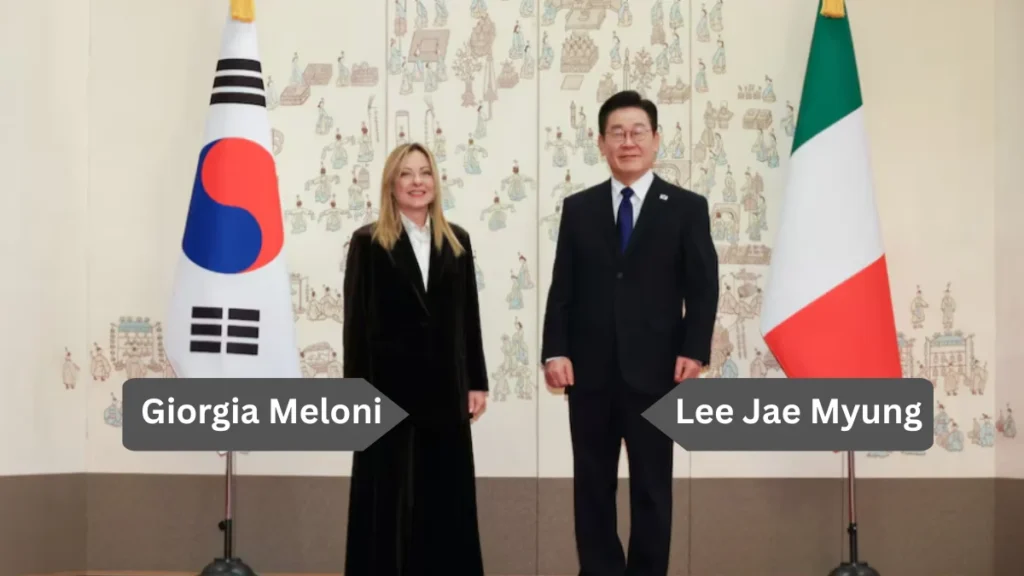
On Monday in Seoul, South Korean President Lee Jae Myung and Italian Prime Minister Giorgia Meloni agreed to deepen cooperation across artificial intelligence, semiconductors, aerospace, and critical minerals—industries that now sit at the core of economic power and national security.
The talks took place during Meloni’s state visit to South Korea, the first by an Italian leader in nearly two decades, underscoring how much the strategic value of technology partnerships has changed.
Why chips and AI are at the center
At the heart of the agreement is semiconductors—specifically chips tied to AI workloads.
South Korea is one of the world’s most advanced chipmaking nations, while Italy plays a growing role in Europe’s semiconductor and industrial ecosystem. The two countries signed a memorandum of understanding aimed at strengthening cooperation in the chip industry, including components critical for AI systems, according to South Korea’s presidential office, the Blue House.
This isn’t just about boosting trade. AI models are getting bigger, more power-hungry, and more dependent on specialized hardware. Governments increasingly see chip access as a strategic advantage, not just a business concern.
Critical minerals: the less visible pressure point
Alongside chips, the leaders focused on critical minerals—materials essential for semiconductors, batteries, and clean energy technologies.
Lee and Meloni agreed to work more closely on building resilient and reliable supply chains, a nod to growing worries about over-concentration and geopolitical disruption. As demand for AI hardware accelerates, competition for lithium, rare earths, and other inputs is becoming just as important as access to fabs.
More than a tech-only deal
The agreement goes beyond hardware.
Both sides discussed joint research projects, academic and cultural exchanges, tourism, and broader industrial cooperation. They also reaffirmed their shared stance on security issues, including the denuclearisation of the Korean Peninsula—an indication that economic and security agendas are increasingly intertwined.
Italy is already one of South Korea’s top four trading partners within the European Union, giving the relationship economic weight as well as political symbolism.
Why this matters now
This partnership reflects a bigger shift in how tech alliances are forming.
Europe is pushing for greater autonomy in AI and semiconductors, while South Korea is looking to diversify partnerships beyond its traditional allies. Deals like this help both sides hedge against supply-chain shocks and rising global competition, especially as the U.S., China, and the EU race to secure their own AI ecosystems.
Meloni also signaled that this won’t be a one-off moment, renewing expectations that Lee could make a return state visit to Italy later this year.
Conclusion
This isn’t splashy—but it’s strategic.
South Korea and Italy are aligning around the building blocks of the AI era: chips, minerals, and research power.