Apple just placed a big bet on a part of AI most companies are still overlooking: how machines hear us.
The company has acquired Q.ai, an Israeli startup focused on audio intelligence and machine learning, according to Reuters. The deal, reported to be worth close to $2 billion by the Financial Times, ranks among Apple’s largest acquisitions ever—and signals a strategic shift in how the company plans to compete in the next phase of the AI race.
Unlike rivals racing to build ever-larger generative models, Apple appears to be doubling down on AI that lives inside devices, not in the cloud.
Why Q.ai matters to Apple’s AI strategy
Q.ai specializes in machine-learning systems that allow devices to interpret whispered speech, isolate voices in noisy environments, and enhance audio clarity in real time. These capabilities may sound niche, but they fit squarely into Apple’s broader push toward context-aware, sensor-driven AI.
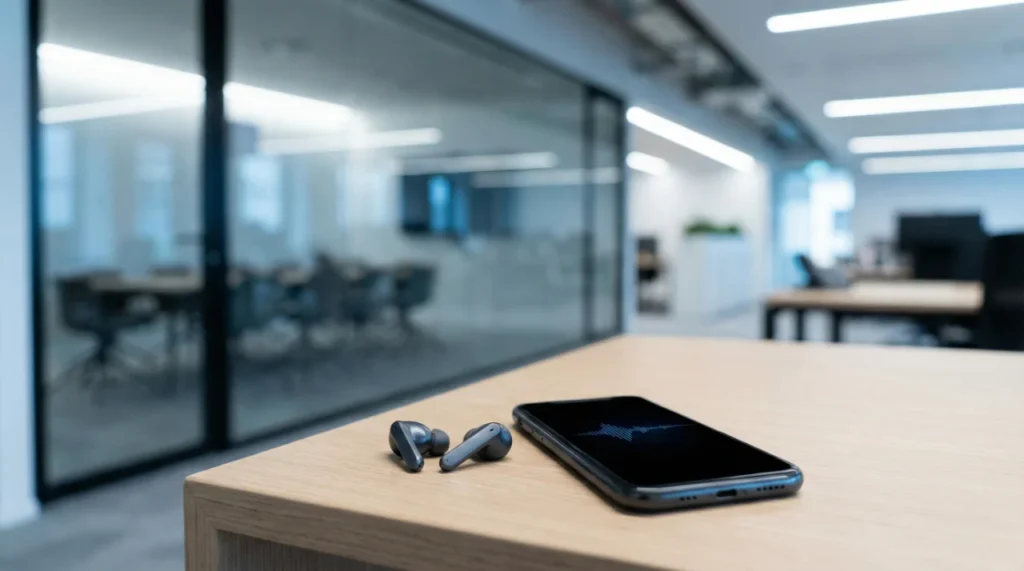
Apple has already been layering AI features into its hardware—most visibly through AirPods, which gained live translation capabilities last year. Technologies like Q.ai’s could dramatically improve how those features work in the real world, where background noise, overlapping voices, and imperfect conditions are the norm.
This isn’t about flashy demos. It’s about reliability.
Audio is becoming the next AI interface
For years, AI breakthroughs have focused on vision and text. Audio—especially subtle, low-volume, real-world speech—has lagged behind. Apple seems determined to change that.
The company has also been developing technology that detects micro facial-muscle movements, a signal that could enhance interaction inside its mixed-reality headset, Vision Pro. Together, these investments point to a future where Apple devices respond not just to taps and voice commands, but to intent.
In that world, hearing accurately matters as much as seeing clearly.
A familiar founder, a familiar playbook
Q.ai’s CEO, Aviad Maizels, is no stranger to Apple. In 2013, Apple acquired his previous startup, PrimeSense, whose depth-sensing technology later became a foundation for Face ID.
That history matters. Apple tends to acquire companies not for short-term features, but for long-term architectural shifts. PrimeSense reshaped iPhone security. Q.ai could do something similar for how Apple devices listen and respond.
As part of the acquisition, Q.ai’s founding team—including co-founders Yonatan Wexler and Avi Barliya—will join Apple.
Timing that’s hard to ignore
The acquisition surfaced just hours before Apple’s quarterly earnings report, where analysts expect revenue around $138 billion and the strongest iPhone sales growth in years.
That timing may not be accidental. While Apple has often been criticized for moving slowly in generative AI, this deal reframes the narrative. Apple isn’t trying to win the AI race by building the loudest chatbot. It’s aiming to own the most intimate layer of the user experience.
The bigger AI race is shifting
Meta, Google, and OpenAI are pouring resources into massive models and cloud infrastructure. Apple is taking a different path—one that prioritizes privacy, efficiency, and hardware integration.
If AI is becoming ambient, always-on, and invisible, then the companies that control sensors, chips, and real-world interfaces may end up with the upper hand.
Q.ai strengthens Apple’s grip on one of those interfaces: sound.
Conclusion
Apple’s acquisition of Q.ai isn’t about headlines or hype cycles. It’s about quietly reshaping how AI fits into everyday life—through earbuds, headsets, and devices that understand us even when we barely speak.
In the next chapter of AI, listening may matter more than talking.