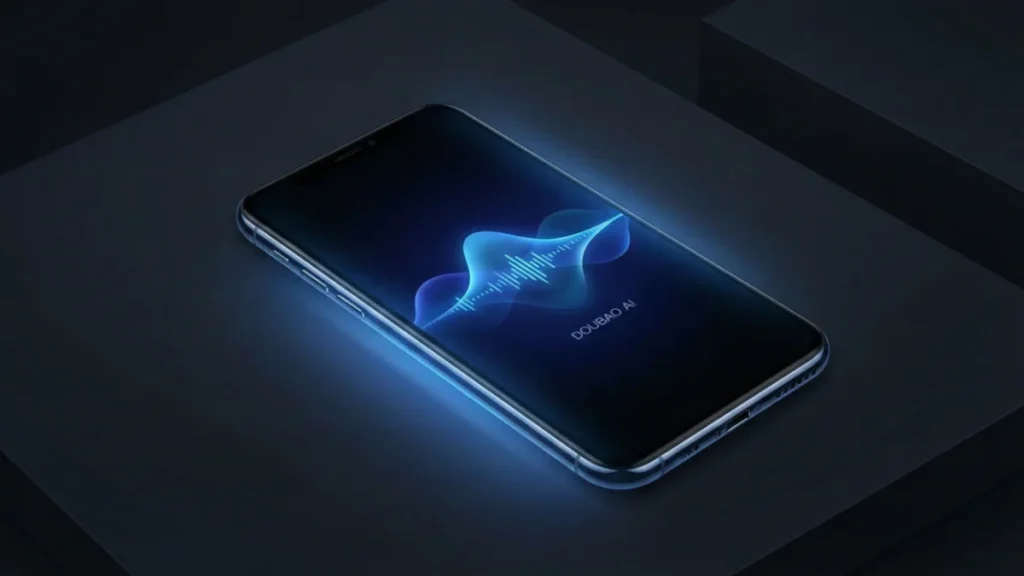
ByteDance is steering its AI model straight into the mobile world. The company has unveiled a new voice assistant built on its Doubao large language model, and its first stop isn’t one of China’s usual premium players—it’s ZTE.
The tool will ship on ZTE’s upcoming Nubia M153, a prototype device available in limited pre-orders at 3,499 yuan (about $495). With it, ByteDance wants to turn everyday smartphone tasks into hands-free, friction-free interactions. Think voice-triggered content search, ticket bookings, and quick utility actions without diving through menus.
It’s a strategic move from a company best known for TikTok and Douyin, not mobile operating systems. ByteDance says it doesn’t plan to build its own phones. Instead, it wants to plug Doubao directly into as many manufacturers as possible—an “everywhere, not just our hardware” play.
A New Battlefront in China’s AI Phone Race
AI is now the baseline battleground for Chinese smartphone makers. Huawei and Xiaomi have already stacked their devices with proprietary assistants. Apple’s upcoming Apple Intelligence suite still has no launch timeline in China, leaving a rare opening in one of the world’s most competitive mobile markets. Alibaba’s pledge to collaborate with Apple on China-specific AI features underscores just how high the stakes are.
ByteDance’s angle is different. Instead of building hardware or a mobile OS, it’s positioning Doubao as the layer that sits above everything else—an AI gateway that manufacturers can adopt without reinventing their tech stack.
ZTE Gets a Market Lift
The partnership is already generating momentum. ZTE’s stock jumped 10% on Monday, its strongest surge in months. Investors reacted to two catalysts: the Nubia phone debut and news that ZTE secured new 5G infrastructure contracts in Vietnam. For a company often overshadowed by Huawei, the timing couldn’t be better.
Doubao’s Rapid Ascent
Doubao is not entering the phone world as an underdog. It has already emerged as China’s most widely used consumer AI model, hitting 159 million monthly users in October. Tencent’s Yuanbao (73 million) and DeepSeek (72 million) trail behind by a wide margin. That scale gives ByteDance a serious edge as it pitches its assistant to other manufacturers.
The Bigger Picture
This rollout signals something bigger than a software update. It marks the beginning of a new phase in mobile AI—where the assistant isn’t just an app icon but a system-level companion. ByteDance wants Doubao to be the voice you talk to regardless of which handset brand you buy.
What’s Next
The company is already in discussions with additional smartphone makers. Expect announcements in the coming months as brands look to differentiate themselves in an AI-crowded market.
For ByteDance, the phone may not be the destination. It’s the gateway—one that puts Doubao closer to becoming China’s default digital assistant.