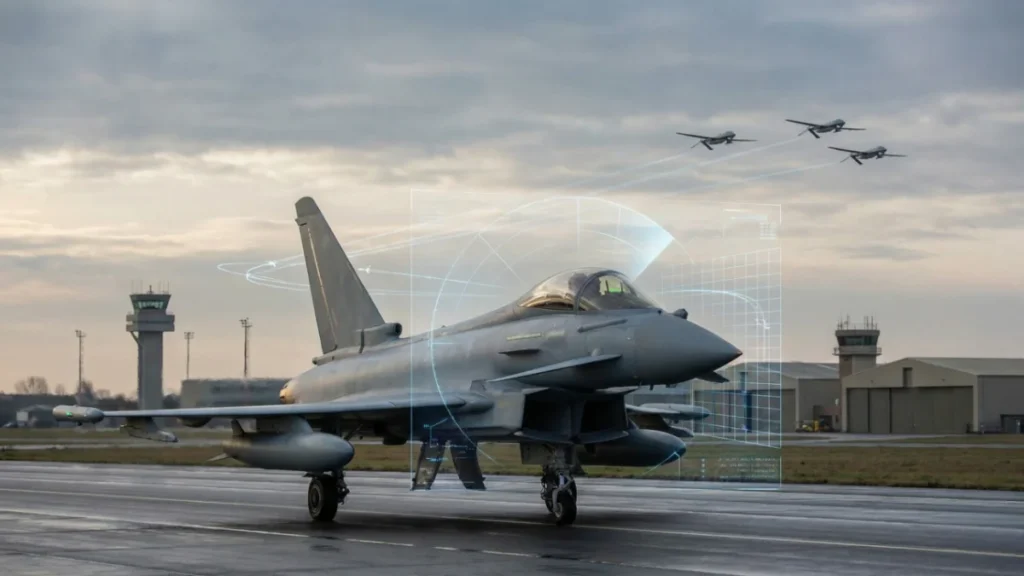
European aerospace heavyweight Dassault Aviation is leading a $200 million Series B investment in Harmattan AI, signaling a decisive shift toward AI-driven combat aviation. The deal, announced January 12 in Paris and Saint-Cloud, ties next-generation artificial intelligence directly to future fighter jets and unmanned systems.
Unlike many splashy AI-defense partnerships, this one comes with a clear operational roadmap—and real aircraft in mind.
From startup speed to frontline systems
Founded in 2024, Harmattan AI has moved unusually fast for a defense company. It already holds multiple Programs of Record with the French and UK defense ministries, meaning its technology is formally approved for military use—not just lab testing.
The new funding will help the company scale AI-powered systems across intelligence, surveillance, and reconnaissance (ISR), drone interception, electronic warfare, and command-and-control platforms. Harmattan says it is already delivering thousands of systems per month, a rare pace in a sector known for long procurement cycles.
Why Dassault is stepping in now
For Dassault, this isn’t a passive investment. The company plans to integrate Harmattan’s “controlled autonomy” software into future combat platforms, including advanced versions of the Rafale and its unmanned combat aerial systems (UCAS).
The emphasis on controlled autonomy matters. Military buyers are wary of black-box AI making battlefield decisions. Instead, they want systems that can assist pilots, coordinate unmanned assets, and operate under strict human oversight.
Dassault CEO Eric Trappier framed the partnership as a long-term sovereignty move—keeping high-value military AI designed, governed, and deployed within trusted allied frameworks.
Europe’s answer to defense AI dominance
The timing is no accident. Across NATO, militaries are racing to integrate AI without becoming dependent on foreign platforms or opaque algorithms. Harmattan’s technology has already been deployed with multiple NATO and allied partners, positioning it as a European-native alternative in a market often dominated by U.S. defense primes.
For Harmattan CEO Mouad M’Ghari, the deal is about scale and credibility. Dassault brings deep experience in certifying complex systems for real combat environments—something most AI startups lack.
What happens next
Expect tighter integration between manned and unmanned aircraft, faster deployment of autonomous ISR missions, and a growing focus on AI that can function reliably under electronic warfare and contested conditions.
The bigger takeaway: this isn’t about flashy demos. It’s about making AI operational, accountable, and embedded in aircraft that will still be flying decades from now.
Conclusion
Dassault’s $200 million bet on Harmattan AI shows where defense technology is heading—less hype, more hard integration. AI isn’t replacing pilots, but it’s quickly becoming an essential wingman.