Maryland just pulled ahead in a race most states are quietly losing: modernizing public services before bureaucracy pushes people out of them.
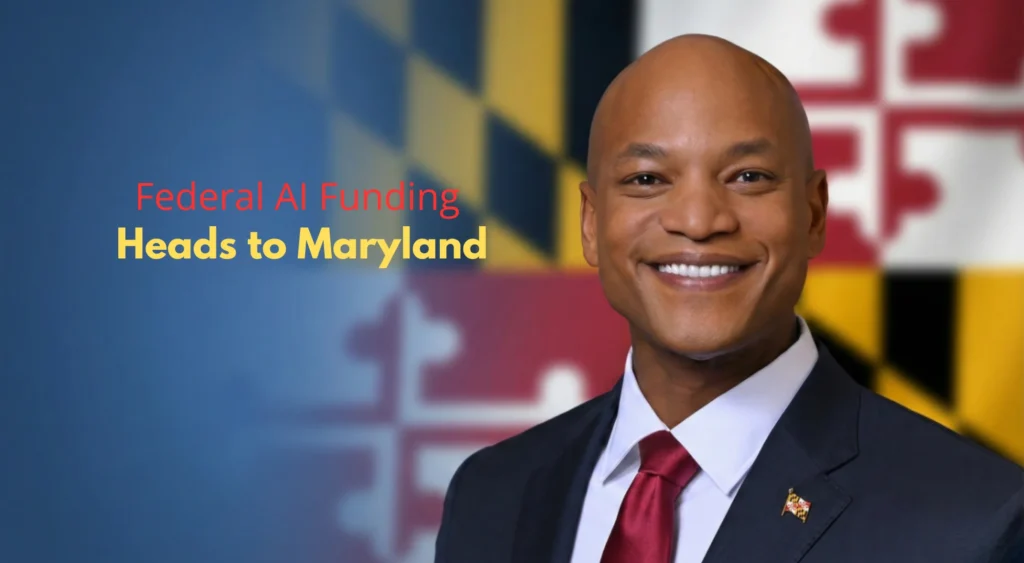
This week, Wes Moore announced that Maryland secured $2.6 million in federal AI grants to overhaul how residents access food assistance, healthcare, and labor services. The funding arrives at a critical moment, as new federal rules threaten to overwhelm already strained state systems.
The grants were awarded by the Center for Civic Futures through its Public Benefit Innovation Fund. Competition was fierce: more than 400 applications from 45 states, with only seven awards granted nationwide. Maryland won two—an unusually strong showing that signals federal confidence in the state’s approach.
Why this matters right now
The urgency is real. Under H.R. 1 (2025), new work and verification requirements have been added to programs like SNAP and Medicaid. Maryland officials estimate the changes could affect around 80,000 food assistance recipients and roughly 300,000 Medicaid enrollees.
The risk isn’t that people suddenly become ineligible. It’s that paperwork delays, missed notices, and administrative bottlenecks cause eligible residents to lose benefits anyway.
Maryland’s bet is that AI—used carefully—can reduce those failures.
“Artificial intelligence can be a powerful tool for change,” Moore said, framing the effort as a way to protect access, not restrict it.
Two projects aimed at one problem: friction
The $2.6 million will fund two tightly scoped initiatives:
Benefits verification modernisation ($1.2M)
Led by the Maryland Department of Human Services and the Maryland Department of Health, this project will use AI to automate and streamline work verification for SNAP and Medicaid. Maryland will serve as the lead state, developing tools designed to be reused by other states facing the same federal mandates.
Labor services modernization ($1.45M)
The Maryland Department of Labor will partner with the Government Performance Lab and the Computational Policy Lab to test AI systems that help staff interpret complex regulations, process documents faster, and train through realistic simulations.
The goal isn’t flashy automation. It’s fewer backlogs and shorter wait times.
A more cautious AI playbook
Unlike many private-sector deployments, Maryland is explicitly tying these projects to its Responsible AI framework. Decisions remain with humans. Data use is restricted. Privacy and bias controls are mandatory.
“We’re not handing authority to algorithms,” said Katie Savage, the state’s IT secretary. “We’re giving public servants better tools to do their jobs.”
That restraint may prove decisive as governments experiment with AI while facing growing scrutiny over transparency and fairness.
The bigger signal
Maryland’s win highlights where government AI is actually headed—not chatbots or splashy demos, but invisible systems that determine whether someone gets help on time.
If these pilots work, they won’t just modernize Maryland’s agencies. They could quietly set a blueprint for how states nationwide use AI to keep public services functioning under tighter rules and higher demand.
Conclusion
Maryland isn’t using AI to make government smaller. It’s using it to make government work—before the system breaks under its own paperwork.