PolyAI just landed a major vote of confidence.
The Cambridge-founded AI startup has raised $86 million (£64.3m) in a Series D funding round that blends Silicon Valley firepower with UK government backing. Nvidia’s venture arm is in. So is the British state.
The message is clear: enterprise voice AI is no longer experimental. It’s infrastructure.
From University Spinout to Global Call Centers
PolyAI builds AI voice agents designed to sound—and behave—like real humans. These systems don’t just route calls or read scripts. They hold conversations.
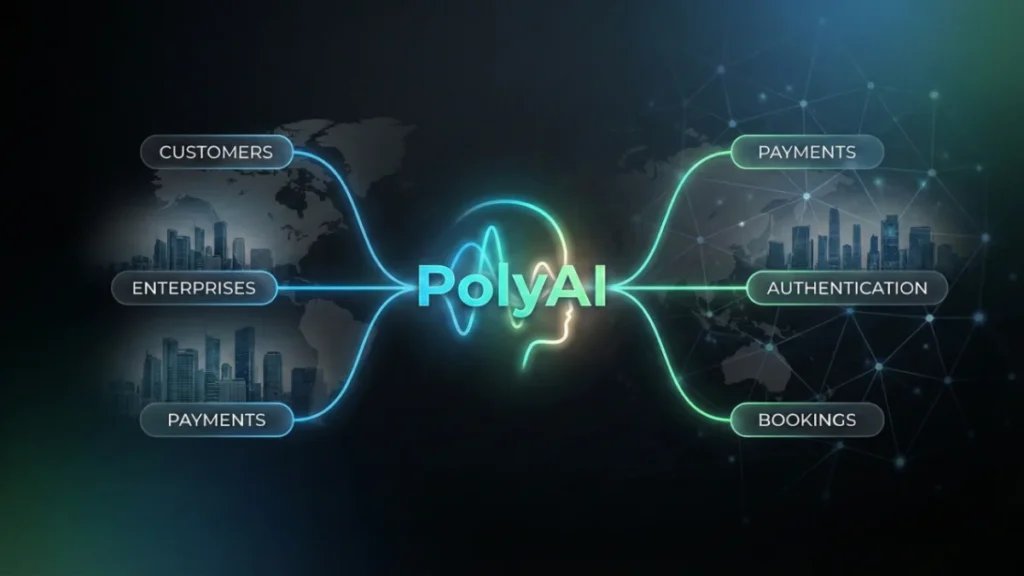
The company says its agents can understand intent, manage multi-step requests, handle authentication, take payments, and complete bookings. All without handing off to a human.
That capability has already attracted big customers. Volkswagen. FedEx. Foot Locker. The kind of brands that don’t tolerate flaky automation.
Why Nvidia’s Name Changes the Story
The Series D round was co-led by Georgian, Hedosophia, and Khosla Ventures, with participation from NVentures, Nvidia’s investment arm, alongside Sands Capital, Squarepoint Ventures, Citi Ventures, and Point72 Ventures.
Nvidia’s involvement stands out.
The chip giant has increasingly backed companies that sit closer to real-world deployment—software that actually consumes AI compute at scale. Voice agents that run nonstop inside enterprise call centers fit that thesis neatly.
If AI is going to justify the infrastructure boom, it needs to work where the pressure is highest. Customer service is one of those places.
The UK Government Steps In
The British Business Bank, owned by the UK government, invested £15 million in the round. That’s not just a financial decision. It’s political.
The UK has been vocal about wanting to keep high-growth AI companies from relocating once they scale. PolyAI is exactly the kind of firm policymakers worry about losing to the US.
Officials framed the investment as part of a broader effort to turn strong research and early-stage innovation into long-term economic value.
A Fast-Growing Market With Little Patience
This is PolyAI’s second major raise in just over a year. The company pulled in £40 million in May 2024. The pace reflects demand—and impatience.
Enterprises want automation that actually works. Not chatbots that frustrate customers. Not phone trees that loop endlessly.
Voice AI promises lower costs and better experiences. But only if it can handle real conversations, accents, interruptions, and edge cases. That’s where many systems still fail.
PolyAI is betting that its models are finally good enough to cross that line.
What Comes Next
CEO and co-founder Nikola Mrkšić says the new funding will fuel the next phase of growth. More enterprise deployments. Deeper integrations. Better conversational reliability.
The stakes are high.
As AI agents move from pilots to production, failures become expensive—and visible. A broken demo is forgivable. A broken customer service line is not.
The Bigger Picture
This round sits at the intersection of three forces: enterprise AI adoption, Nvidia’s expanding influence beyond chips, and the UK’s push to anchor AI winners at home.
If PolyAI succeeds, it won’t just automate calls. It could redefine how businesses talk to customers.
And that’s a conversation every enterprise is paying attention to.