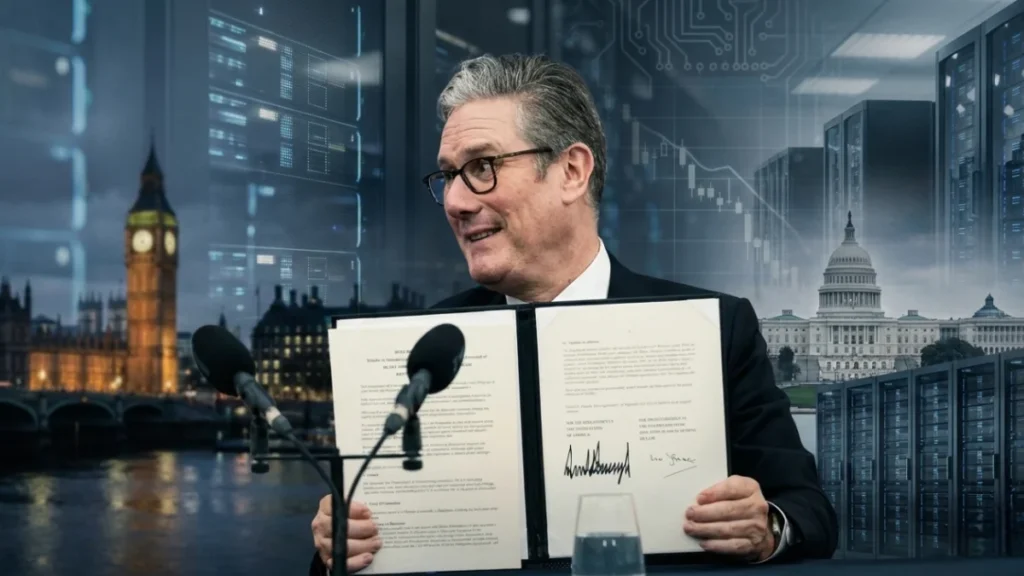
The US has slammed the brakes on a £31bn tech investment plan for Britain.
What was pitched as a landmark reset in US-UK relations is now frozen. And the reason is blunt: Washington says the UK hasn’t played ball on trade.
The so-called tech prosperity deal, unveiled with fanfare during Donald Trump’s state visit, was meant to funnel billions from US tech giants into the British economy. Instead, it’s now sitting in diplomatic limbo.
A Deal That Looked Too Big to Stall
When Prime Minister Keir Starmer announced the agreement, he called it a “generational step change.”
The numbers backed that up.
US companies pledged massive spending. Microsoft alone committed £22bn. Google lined up £5bn more. The centrepiece was an ambitious AI growth zone in north-east England, promising thousands of jobs and a new tech corridor.
But buried in the agreement was a caveat.
The deal would only move forward if both sides made “substantive progress” on wider trade issues.
Washington now says that progress never came.
Why the US Pulled the Plug
US officials are frustrated. Not quietly.
At the top of the list is Britain’s digital services tax. The 2% levy hits revenues at major US tech firms. It brings in hundreds of millions each year—and Washington hates it.
There’s also anger over food standards. UK rules block imports like chlorine-washed chicken and hormone-treated beef. The US argues those rules shut out American farmers.
Online safety regulation is another sore spot. US officials have pushed Britain to soften enforcement that could hit American platforms.
From Washington’s view, the UK wants US capital without US concessions.
London Tries to Shrug It Off
British officials are publicly calm.
Privately, not so much.
Sources describe the pause as “hardball negotiating,” not a breakdown. They point to past trade rows that stalled before suddenly moving again.
The message from London is clear: this isn’t over.
But the timing hurts. The government spent a year cultivating US ties, partly to avoid tariffs on British exports. Starmer even hosted Trump for a rare second state visit at Windsor Castle.
That effort now looks fragile.
The Tax Britain Won’t Drop
Starmer has refused to scrap the digital services tax.
Earlier this year, officials explored tweaks that would spread the tax across more companies while reducing the burden on US firms—without cutting revenue. Those ideas went nowhere.
The tax is politically sensitive. Removing it would trigger backlash at home. Keeping it risks retaliation abroad.
For now, the government is standing firm.
Why This Is Bigger Than One Deal
This isn’t just about money.
It’s about leverage in the next tech era.
AI, quantum computing, and advanced infrastructure are becoming tools of geopolitical power. Investment flows now double as bargaining chips.
By freezing the deal, Washington is sending a signal: access to US tech capital comes with strings attached.
For the UK, the risk is momentum. The AI growth zone was meant to anchor long-term investment and regional jobs. Delays could push companies to look elsewhere.
What Happens Next
Business secretary Peter Kyle was in Washington last week meeting senior US trade officials. Talks covered everything from steel and whisky tariffs to critical minerals.
Negotiations are expected to continue in January.
Meanwhile, Starmer is preparing to appoint a new ambassador to Washington—a move that could shape the next phase of talks.
Conclusion
The £31bn tech deal isn’t dead.
But it’s no longer a sure thing.
What was sold as a symbol of a renewed special relationship is now a pressure point. And the outcome will show how far Britain is willing to bend—and how hard the US is prepared to push—to win the future of tech.