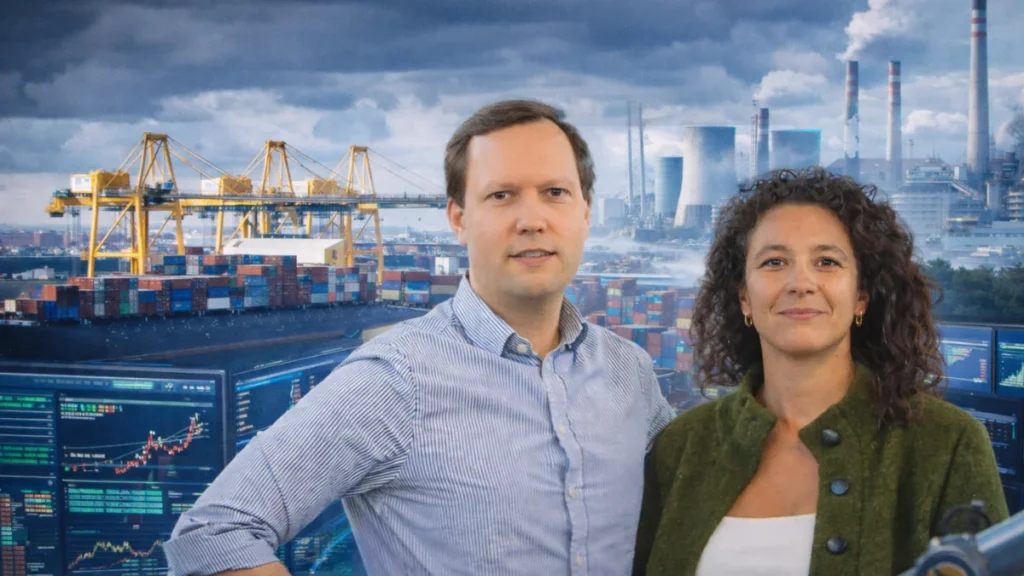
Berlin-based Andercore has raised $40 million in a Series B round to modernize Europe’s industrial supply chains — a sector that still leans heavily on email threads, spreadsheets, and phone calls to move billions in materials across borders.
The round blends equity and debt, with existing investors Atomico and Project A doubling down, while Inven Capital joins as a new backer. Institutional financing comes from Commerzbank and KfW.
With this raise, Andercore’s total funding now stands at $75 million.
Turning Emails Into Algorithms
If you’ve ever wondered how steel beams, power cables, or bulk construction materials get sourced across Europe, the answer is surprisingly analog.
Pricing negotiations often happen manually. Quotes are fragmented. Financing gets arranged separately. Cross-border deals can take days — sometimes longer — as buyers and suppliers try to align on terms.
Andercore’s pitch is simple: wrap the entire transaction in AI.
The company connects international suppliers with local industrial buyers in sectors like infrastructure, energy, and building materials. Its proprietary system handles pricing, quoting, logistics coordination, quality checks, and embedded finance — all inside a single digital workflow.
Founder and CEO Philipp Andernach describes the company as “AI that moves containers of real products globally.” It’s less chatbot, more orchestration engine.
Not Just a Marketplace
Unlike a traditional B2B marketplace that simply matches buyers and sellers, Andercore takes a more active role. The company buys goods from suppliers and resells them to buyers, managing transactions on its own account.
That approach allows it to standardize pricing models, streamline financing, and reduce friction in categories where complexity is the norm.
The company says it currently manages thousands of large transactions each month across seven European markets, focusing on industrial categories that collectively represent more than €200 billion in annual demand across Europe.
Why Investors Care
Industrial trade doesn’t have the consumer gloss of fintech or AI chat apps. But it underpins what investors often call “the real economy.”
Atomico’s Niklas Zennström framed the opportunity around modernization: industrial wholesale is foundational to infrastructure and energy projects, yet much of it still runs on manual processes. The firm sees Andercore as building next-generation infrastructure for cross-border trade.
Project A’s Florian Heinemann pointed to operational discipline as a differentiator, arguing that AI only delivers impact when paired with execution in highly fragmented markets.
The participation of Commerzbank and KfW adds another layer. Institutional lenders rarely step in at this stage unless they see stable underlying trade flows. Their involvement signals confidence in the platform’s transaction engine — not just its software promise.
A Timely Bet on European Supply Chains
Europe’s supply chains have faced repeated stress tests in recent years — from pandemic disruptions to energy shocks. Governments and businesses alike are looking for greater resilience, transparency, and speed.
Platforms that centralize procurement, financing, and logistics could play a larger role in that shift.
Andercore’s immediate plans include expanding geographically and widening the industrial categories it supports. Longer term, the company aims to enable suppliers to sell directly through the platform, effectively turning it into a structured digital backbone for industrial trade.
The Bigger Picture
There’s a quiet transformation happening beneath the surface of Europe’s economy.
While consumer AI tools grab attention, startups like Andercore are applying machine learning to sectors that rarely trend on social media but move massive volumes of capital and materials. If successful, the company won’t just make quoting faster — it could reshape how industrial goods are financed and distributed across borders.
For now, the $40 million injection gives Andercore the runway to test whether algorithms can finally replace inbox-driven commerce in one of Europe’s most traditional industries.
Industrial trade may not be flashy. But it’s enormous. And it’s overdue for change.